

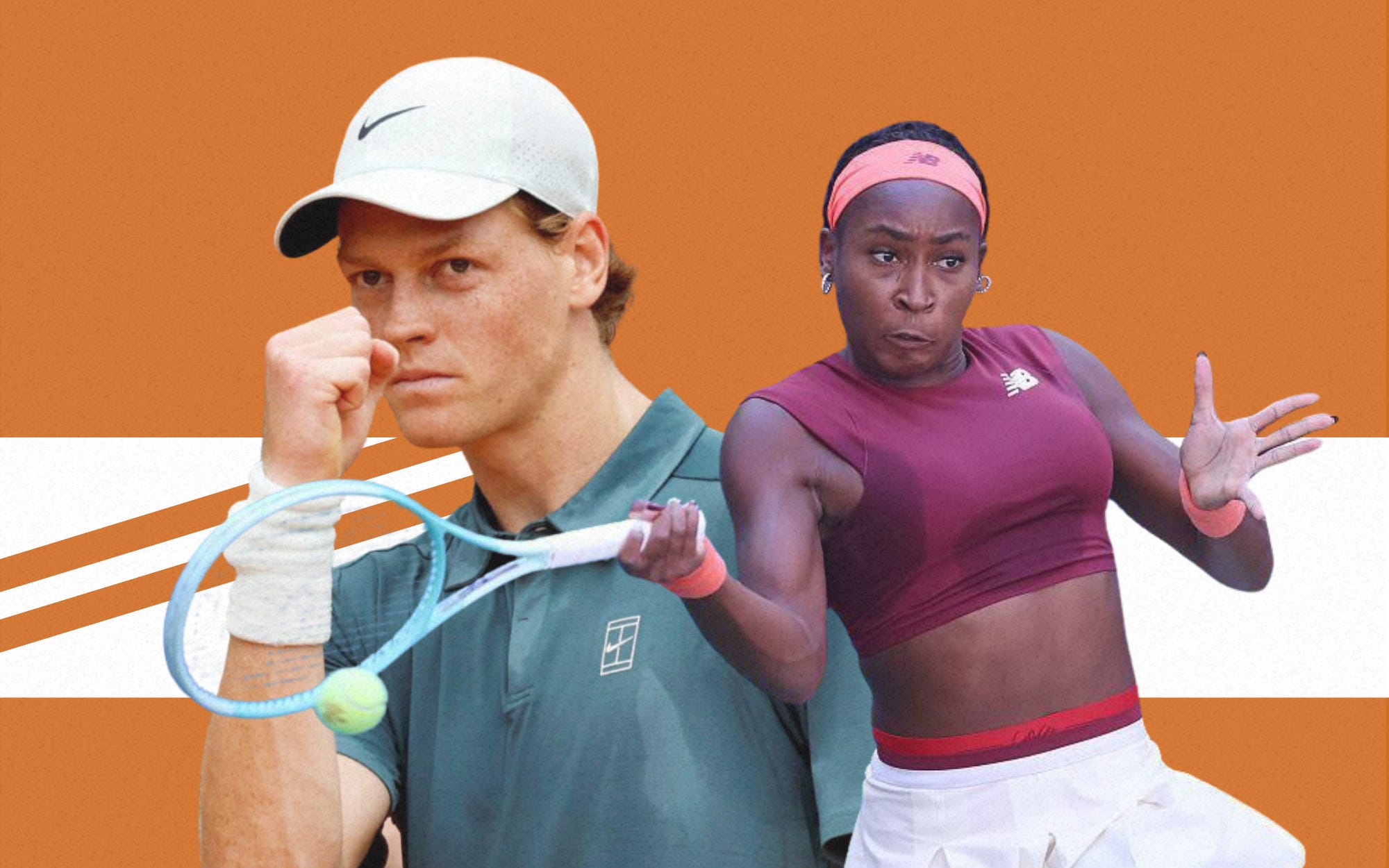
As tennis moves deeper into life beyond the Big Three, the sport is changing quickly, and, in many ways, thriving.
A new generation of stars has entered the fray, pushing the game into fresh territory and easing fears that tennis would struggle to maintain its pull once Roger Federer, Rafael Nadal and Novak Djokovic began to fade from centre court.
Those worries now look misplaced. Carlos Alcaraz, Jannik Sinner, Iga Swiatek, Coco Gauff and Aryna Sabalenka have not merely inherited the sport’s spotlight but have helped reshape it.
But away from the court, a different kind of story is gathering pace heading into the second Grand Slam of the year at Roland Garros.
Tennis finds itself facing a renewed challenge that could alter the landscape of the sport for years to come. Players are becoming increasingly united over prize money, revenue sharing and the question of how much of tennis’s growing wealth should flow back to the people who make the sport worth watching.
The prize money debate has been dragged by players into the public arena, raising a question the sport has spent years politely avoiding: why do those athletes receive such a small slice of the money they generate?
The immediate flashpoint has been the upcoming French Open. Roland Garros has increased its 2026 prize money pot by 9.5% to €61.7 million, however players point out that their share of tournament revenue is projected to fall from 15.5% in 2024 to 14.9% in 2026.
Players had reportedly requested a move towards 22%, in line with other major ATP/WTA 1000 events.
This is why Sinner, Gauff, Sabalenka and others have been willing to raise the nuclear option: a Grand Slam boycott.
Sinner has framed the dispute not as greed, but as offering players more respect. Gauff has pointed towards the difficulty lower-ranked players face with comfortably making ends meet. Sabalenka has been among the loudest voices calling for collective action. Novak Djokovic, long associated with the Professional Tennis Players Association, has backed the broader push for structural reform.
"It's more about respect, you know? Because I think we give much more than what we are getting back. It's not only for the top players, it's for all of us players," Sinner told reporters ahead of the Italian Open in Rome.
To the casual observer, tennis players complaining about prize money can sound absurd. Grand Slam winners will earn millions while the biggest names fly privately with huge entourages, wearing luxury watches and signing massive endorsement deals.
Carlos Alcaraz was reportedly the world’s highest-paid tennis player in 2025, with estimated earnings of over $50million. Gauff topped Forbes’ 2025 list of highest-paid female athletes with $33million, ahead of Sabalenka and Swiatek.
But the economics of tennis changes drastically beyond the top category of stars. Players largely rely on prize money around the circuit to earn money, while a lucky subset might receive sponsorship and endorsements deals, or even grants and funding from their home federations.
The sport is more akin to a travelling circus of independent contractors than a single sports league with guaranteed salaries, revenue sharing, pensions and collective bargaining power.
In addition, expenses come direct from players own pockets — often scraping the bottom of prize money once they’ve paid off taxes, coaches and physio, travel, accommodation and all the other miscellaneous expenses that comes with being a globetrotting sports athlete.
In contrast, in the NBA, players receive roughly 49–51% of basketball-related income. In the NFL, players receive at least 48% of annual revenue under the current collective bargaining agreement. In major American team sports, the idea that players should get close to half of the money is not absurd but simply baked into the economic model of the sport.
Tennis is nowhere near that. The Grand Slams are tennis’s biggest money spinner and sit comfortably alongside other premium sporting properties, yet are understood to allocate roughly 13–15% of revenues to prize money. The players’ ask of 22% is not even close to half that of primary American sports leagues.
Jessica Pegula, another player spearheading the push towards fairer pay, told The Times that the campaign is about more than simply increasing prize money.
“What we’re really looking at is player welfare, pensions, stuff like that. That’s really important and right now the grand slams don’t contribute anything,” she said.
“Second to that is the prize money revenue share not changing. It’s not meant to look like ‘we want more money’, that it’s greedy, it’s just what’s fair. When you look at other sports, the revenue share is not changing.”
The ATP’s own Baseline programme is an acknowledgement of this problem. For 2025, it guaranteed minimum income thresholds of $300,000 for top-100 singles players, $200,000 for players ranked 101–175, and $100,000 for players ranked 176–250, provided they met certain playing requirements. That sounds useful, but it also reveals the fragility at the lower levels of the professional circuit. In what other supposedly major global sport does a top-250 athlete need a safety-net programme to make their career viable?
For context, Jannik Sinner led men’s tennis in 2024 with $16.9million in prize money. The ATP No. 100, Federico Coria, earned around $590,000, while No. 250 Abdullah Shelbayh earned just under $205,000 in singles prize money. Those numbers are before the substantial costs of operating as a professional tennis player. Tennis stars are rich, but tennis professionals are often far less secure than their equivalents in other major sports.
Tennis, generally, has always had a strange relationship with labour power. Its stars are individually famous, but collectively quite disparate. The tours are split. The Grand Slams operate as their own power centres and are run by local federations, or in the case of Wimbledon, a private tennis club.
The ATP, WTA, ITF and tournament owners all have overlapping interests. There is no single commissioner, no simple league table of revenues, no clean CBA negotiation where players can sit across from figures who can help align funding and player revenue.
Instead, tennis players are the product, but not the owners. They are the reason the tickets sell, but also not part of the room where salary and revenues are discussed.
The Grand Slams will argue, not entirely without merit, that their money does not simply disappear into the ether — they fund facilities, grassroots programmes, national federations, development pathways and the wider ecosystem of the sport. That there is a broader tennis pyramid to sustain.
There is also an optics trap in the discussion. Tennis leadership know fans are unlikely to instinctively sympathise with millionaires demanding more millions. That is why the campaign needs to keep pushing the lower-ranked player to the front of the argument.
The romance of tennis is that anyone can, in theory, pick up a racket, climb the rankings and walk onto Centre Court in any given year. The reality is that the road is brutally expensive. If only the already wealthy, heavily sponsored or federation-backed can survive long enough to break through, then tennis becomes less meritocratic than it pretends to be.
And that, ultimately, is why the pay dispute matters. Prize money is not just a reward, but probably the single greatest backbone of a true professional tennis pathway. It decides who gets to keep travelling. Who can afford a coach. Who can travel comfortably and recover properly. Who can bring a physio. Who can play a full schedule without gambling their future on the next cheque that might never arrive.
A boycott, as things stand, feels unlikely to happen and, in truth, probably suits both sides better as a threat than a reality. Tennis doesn’t need to become the NBA, nor does it need salary caps, franchises or trade deadlines. Part of its beauty is that it remains brutally individual, global and slightly chaotic in that regard.
But it does need to answer a basic question — if the players are the whole show, why are they still fighting for a fair share of the box office?