

For a month, and against most of the warnings I’d issued myself, it ended up being a pretty good World Cup.
I spent the spring convinced this thing would be a 48-team monument to Gianni Infantino’s ego, a tournament bloated past the point of meaning and priced past the point of decency. Some of that held. Actually, pretty much all of that held.
But the football has a habit of becoming an overpowering distraction, and for most of the four weeks the actual games did their part. Cape Verde became the smallest nation ever to reach a knockout round, and then took Argentina to the very edge of the cliff, where Sidney Lopes Cabral’s extra-time equaliser will go down as one of the tournament’s great moments.
Vozinha, the 40-year-old goalkeeping hero of Cape Verde, and his Dublin-compatriot Pico Lopes, also held the eventual winners to a 0-0 draw. Dick Advocaat, having left the role due to his daughter’s illness, returning to a tearful opening game for Curacao.
Several titanic games. Mexico and England at the Azteca, Norway beating Brazil, Paraguay going the distance against Germany. Belgium’s mental turnaround against Senegal.
The biggest names shone. Erling Haaland soared and became a household name in the U.S. Leo Messi and Kylian Mbappé went into the final weekend level on eight goals apiece, both having strolled past Klose in the record books on the way. Jude Bellingham starred for England. Giants like Germany and Portugal were slain, while in the end the four top seeded teams remained. Spain bettering the highly favoured French side, while Argentina performed miracles, who kept pulling rabbits out of hats managed one more in the late moments to overcome a retreating England from 1-nil down.
England and France, two sides who’d have happily skipped the third-place game, somehow produced a 6-4 classic that almost nobody had asked for.
Despite every effort from FIFA, including ad breaks disguised as three-minute hydration interludes which cut every game into four quarters, totally changing the flow of a sport that had managed just fine for over a century. Celebrity-spotting dominated TV productions. The price of tickets still hovered in the background, yet stadiums filled up regardless.
But the football persevered onwards. And then everyone perched down for the final and it was like someone had flicked on the lights in the nightclub.
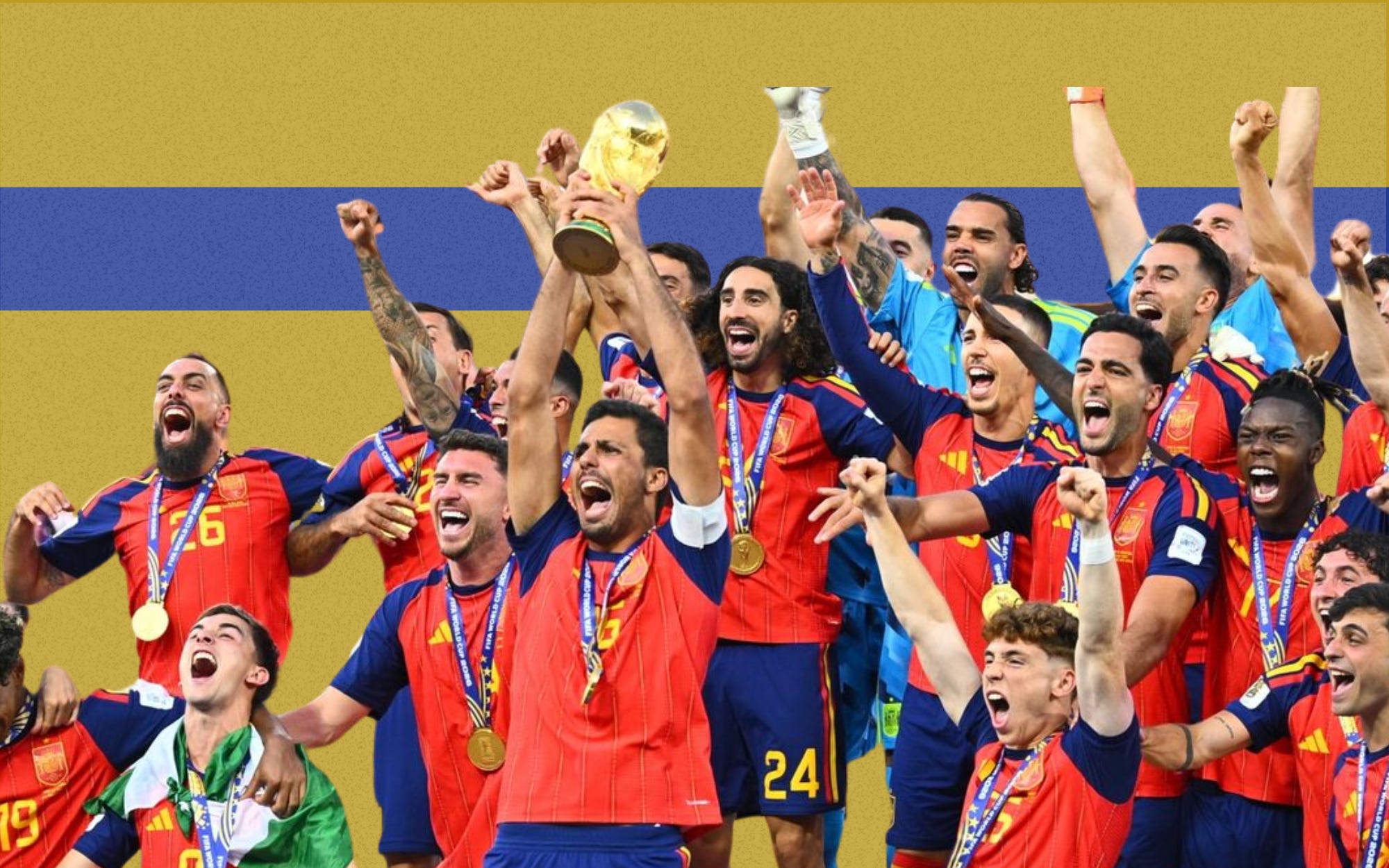
Spain won the World Cup 1-0 after extra time, which rather flatters the drama. It was a truly pig of a game, quite possibly the worst finale the World Cup has ever seen. Armed with all the shadow tactics they could muster, Argentina came less to play, more to scream and kick their way past a clearly superior Spanish side. For a hundred-odd minutes it held, having nibbled at the heels of the Spanish, in a shithousing effort for the ages which saw them not land a single shot on goal in the initial 90 minutes of play.
Ferran Torres finally put a foot through it in the 106th and we all rejoiced as football was the winner.
And Messi cried. Thirty-nine years old, a runner-up medal round his neck once again, and all his emotions buckled just as he turned away from the dignitaries and faced towards his home crowd. It might not be his last World Cup, but the weight of an entire country kind of lifted off his shoulders in that moment, as the fans hailed their hero who had spent much of the first half of his otherworldly career in a pretty strange relationship with the Argentinean fanbase. His harshest critics won over, even in defeat.
I wrote prior to the final that Argentina had built an identity around him worth trusting, and they had, but the final stripped back too much of the football and exposed the nastier element that people will come to remember about this side. Spain were just far superior and the Argentinean reservoir of slices of good luck and never say die charm had finally dried up.
And then there was the brothers-in-arms, Donald Trump and Gianni Infantino.
Because the 2026 World Cup final will not, in the end, really be remembered for Ferran Torres’ goal. It might be remembered for some of the thuggery mid and post match. But it’ll most certainly be remembered for Donald Trump, who had kind of managed to keep out of his own way for much of the tournament. That was, until the low point in the round of 32, when the United States’ Folarin Balogun raked his studs down a Bosnian’s leg, got himself sent off, and earned the automatic one-match ban that every other player in the tournament would have served without review.
Trump rang Infantino, and the ban somehow disappeared into thin air. A truly unprecedented move that may yet have ramifications for the sport and Infantino (who are we kidding, it’ll be swept under the carpet). Balogun played the next game and Belgium won anyway, spending the closing stages openly mocking the president.
The Belgian FA reached for the disciplinary code and the tournament regulations, chapter and verse. But the plainer description is that the rules of the world’s biggest sporting event were changed mid-tournament by a phone call from a man who does not follow the sport, and that FIFA, the body that exists, nominally, to guard those rules, folded like a garden chair.
So nobody should have been surprised by what happened at the final whistle. Trump handed Spain the trophy, which is protocol, and then declined to leave, which is not.
Infantino, to his visible discomfort in his horrendous suit and white trainers, had to skip across the podium and physically take the president by the arm to steer him toward the edge of it, like steering your Alzheimer's-ridden granny to bed.
And even then Trump planted himself beside the last Spanish player still in shot, applauding, in frame for the photographs of a triumph he’d had nothing whatever to do with. FIFA then posted its own picture of the trophy lift with the president carefully cropped out. Spain’s FA have posted photos of the presidents-in-cringe carefully edited out.
And that was the 2026 World Cup, more or less. A tournament better than its leadership deserved, a final that its tournament didn’t deserve. It’ll go down as a decent World Cup let down by the non-footballing nonsense around it and the final, sadly, stumbling over the finish line. The less said about the half-time show the better.
In the end, if we can somehow stick to the football — Spain are champions and thoroughly deserve to be.