

“To die will be an awfully big adventure,” says Peter Pan, who never had to file for a testimonial.
There is a moment, somewhere around the fourth-set tie-break, when the retirement match stops being tennis and becomes theatre. The crowd stiffens as the conclusion they’d come to see beckons. Not for the point or the game or the set. The score is Career Point, and in this moment everybody knows their role.
And, most pertintly, Wimbledon knows its price, sets it accordingly and hands you the golden ticket with a strawberry on top.
Tuesday night on No. 1 Court, Stan Wawrinka lost to Matteo Berrettini across four hours and nineteen minutes of the most beautiful futility you’ll see this year: 6-7, 7-6, 7-6, 7-6, three tie-breaks lost by the width of a chalk mark, one of them (16-14) long enough to have its own interval and ice-cream vendor.
Wawrinka is 41. It was his nineteenth Championships and his last, granted by wildcard, and when it was over he stood in the London dusk and told the crowd, “I don’t want to retire, but I know it’s time to stop. One of the reasons I kept playing for so long was to experience nights like this.”
Wimbledon, an institution that raised its prize pot by a record twenty per cent this year to £64.2 million and has raised half a billion pounds selling five-year Centre Court seats, has discovered that the goodbye is a monetisable resource. You don’t even need the player to win. You just need them to leave, on camera, on the main show courts, to the fawning of fans and broadcasters.
Their prime had been long monetised and eventually their rankings tumbled and fresh faces took on the mantle of entertaining the grassy Wimbledon knolls, relegating them to the periphery. But the farewell is a lucrative sequel, and sequels - as any Netflix executive with a “sports vertical” will tell you - test extremely well.
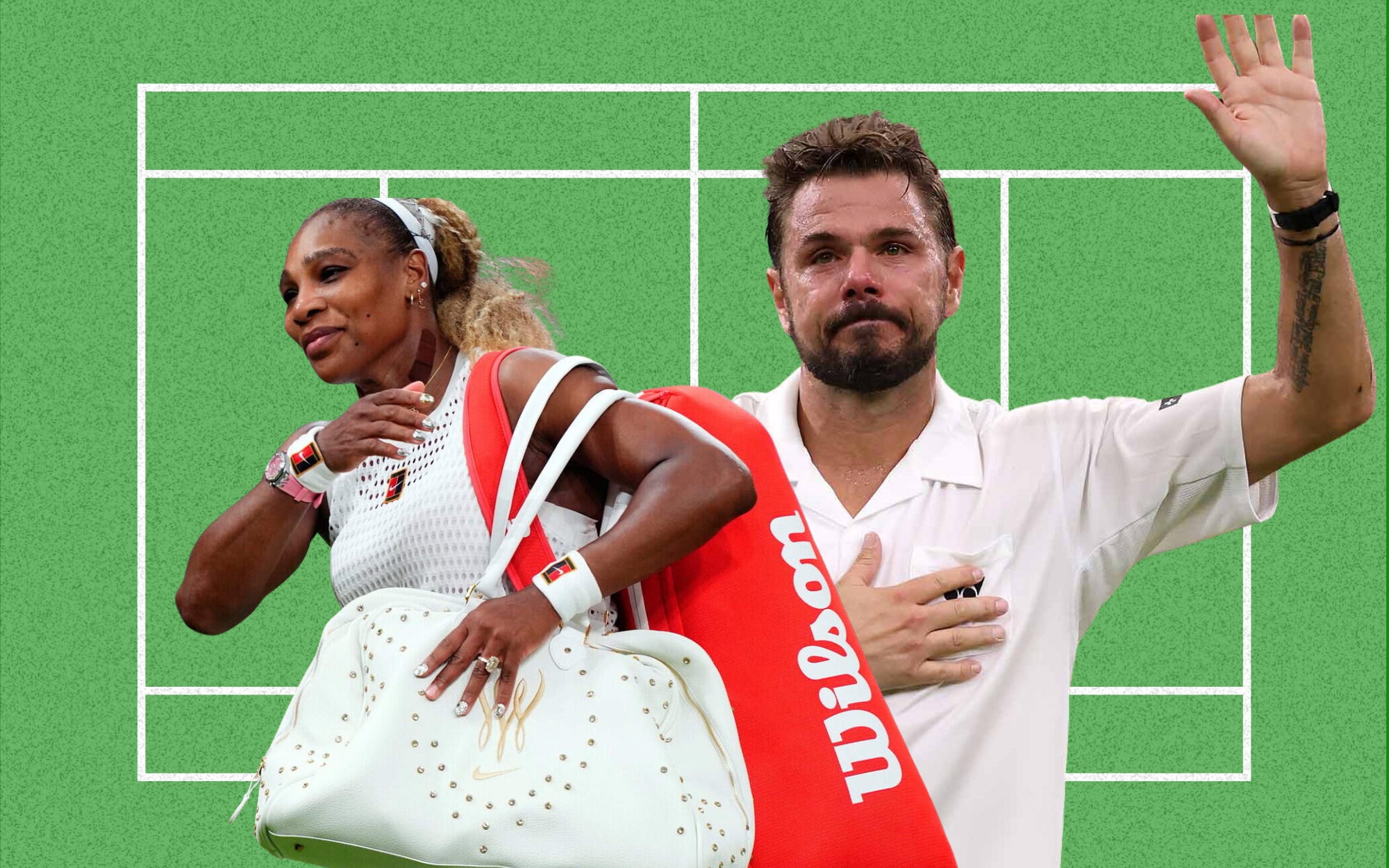
Consider the week’s roster of departures. Wawrinka, the noble four-hour warrior, exits stage left. And then the headline act: Serena and Venus Williams, wildcarded into the women’s doubles, on the same court together for the first time since the 2022 US Open, with six Wimbledon doubles titles, fourteen Grand Slams as a pair, one 2012 Olympic gold on this very grass. It is, on paper, the most romantic ticket in sport.
Serena, 44, had already made her singles return after a spell in retirement and lost her singles opener to the 19-year-old Maya Joint in two hours and twenty-two minutes, tweaking her right knee at the end of the first set. With that injury in mind, the sister double act were scheduled to play on Thursday but that was quietly shelved, and, at the time of writing, has yet to be rescheduled, nor was a reason given for why it was postponed in the first place.
The cheap version of this column says: cynical old Wimbledon exploits ageing legends for content, the end.
But that’s a lie of omission, and the omission is the players themselves. Wawrinka asked for the invitation and called that battering “the best feeling ever.” The sisters also chose this. Nobody is being dragged onto Centre Court in leg-irons. The whole ghastly beauty of it is that everyone wants the same thing at once - the player wants one more night, the crowd wants to say they were there, the broadcaster wants the montage and early tournament viewership spike, the club wants the debenture holder in the good seat with the good champagne feeling something tangible.
For one evening, the interests of the mark and the house align perfectly. That’s just the market working.
There’s a difference between a farewell that happens and a farewell that is produced, and the tennis calendar has quickly transitioned from the first to the second. A genuine goodbye is a player, at the end of a road, being met by a crowd that loves them. A produced goodbye is a wild card issued with an eye on the order of play, a No. 1 Court slot given not for the ranking but for the ratings of the weeping. This is the oldest trick in the content business; you don’t manufacture the feeling, you just build the turnstile for it and take a fee at the gate.
And here’s where my sympathy curdles slightly, in the direction it always curdles: toward the fan holding the ticket. Because the farewell tour is increasingly a gift to the person selling the seat.
The crowd on No. 1 Court paid to watch Wawrinka lose, and got their money’s worth and a slight tear in their eye. But the logic doesn’t stop at the noble four-set defeat. It ends, if you follow it far enough, with legends wheeled out annually as a heritage attraction, monetised in perpetuity, because leaving turned out to be more bankable than staying around.
So watch the Williams sisters this week, if the knee holds up and the schedule delivers. Venus at 46 and Serena at 44 sharing a service box one more time is the kind of thing you’ll be glad you didn’t miss.
The long goodbye, it turns out, is the only part of the career that never has to end.
Great read!