

When a Formula 1 docuseries following the 2018 season hit streaming platform Netflix, it very quickly changed the trajectory of how producers and Netflix in particular would approach the sports documentary.
Drive to Survive was not the first fly-on-the-wall sports series. The NFL had been doing this kind of thing for years, while plenty of clubs, teams and competitions had already invited cameras behind the curtain. But Netflix’s Formula 1 series had managed to discover a certain recipe that helped it find a different gear.
Firstly, it followed a sport that was niche enough to feel fresh and unfamiliar, but simple enough to understand at speed. Formula 1 may be built on ultra-complex engineering, political manoeuvring and microscopic margins, but the basic proposition is wonderfully clean: cars go very fast, drivers try to win, teams try not to crash and burn.
Secondly, it introduced a sprawling cast of characters. Drivers, team principals, billionaire owners, engineers and executives all arrived with their own quirks, grudges, vanities and bloated egos. The show did not need to manufacture drama from nothing. It simply pointed the camera at a sport already full of stress and insecurity.
Thirdly, it looked fantastic, taking the viewer across Monaco, Monza, Singapore, the Gulf and beyond. The sport came wrapped in wealth, glamour and absurdly cinematic backdrops. There were private jets, helicopters, hotel balconies, expensive cars, champagne on yachts, and men in branded polo shirts behaving as if a botched pit stop was an international emergency.
By placing a microscope over a season of racing and cutting it through driver soundbites, paddock politics and boardroom tension, Drive to Survive discovered lightning in a bottle. Its rise was then helped by the COVID-19 streaming boom, when millions of viewers were stuck at home and suddenly had time to binge-watch a sport they may previously have overlooked.
Although Netflix are coy with their viewing figures, Drive To Survive hit a peak of over 90.2m watch hours in season 5 (the 2022 season). F1’s American TV audience roughly doubled across the Drive to Survive era, with ESPN noting that 16 races set viewership records in the 2025 season. Ultimately, there’s strong evidence that Netflix helped drive F1 interest in the US, especially among younger fans, women, and casual sports viewers.
Naturally, this boom introduced the Netflixication of the sports docuseries.
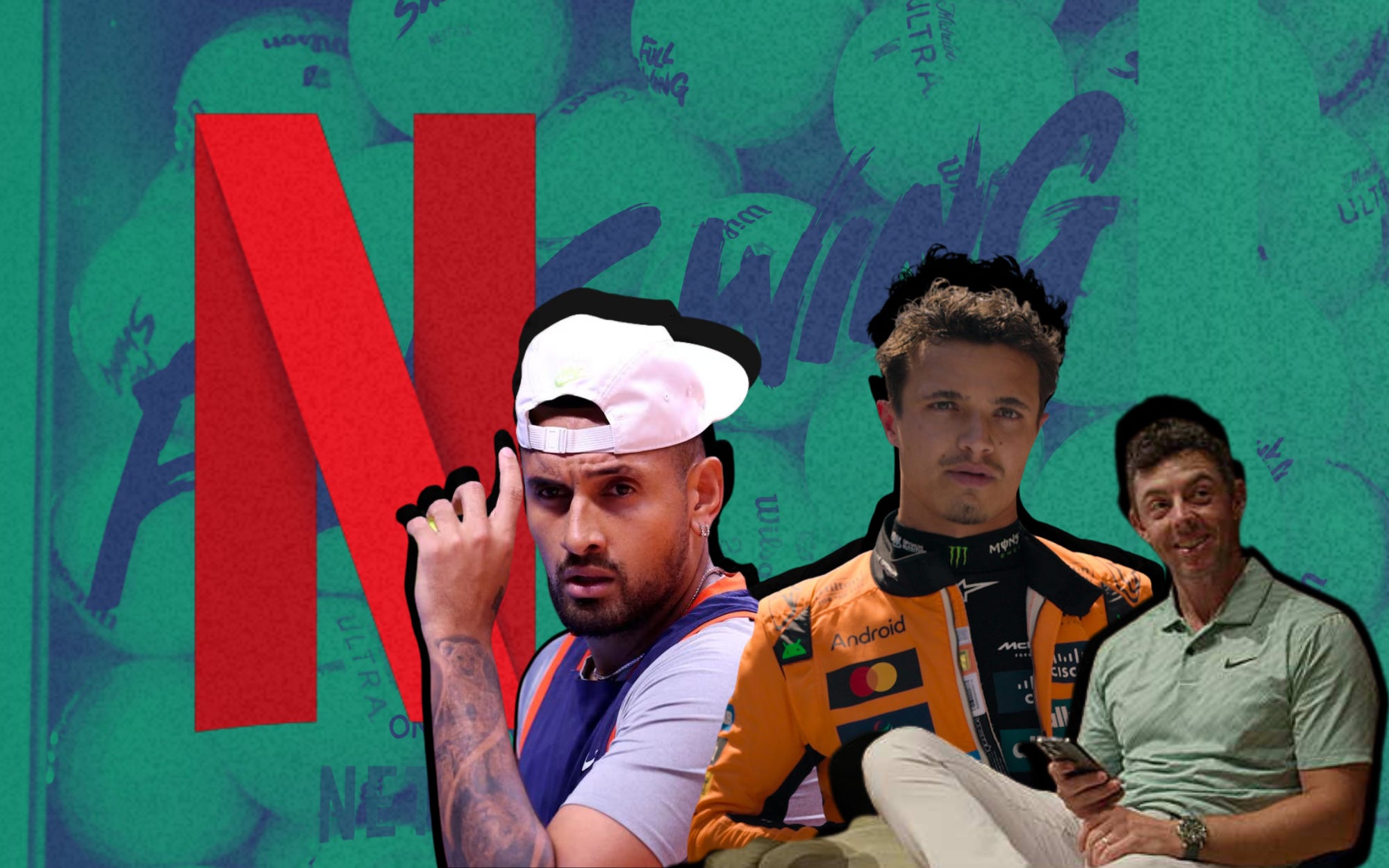
In 2023, Netflix launched Full Swing, following golf’s biggest names, and Break Point, which tracked the top-level tennis circuit. Later that year came Tour de France: Unchained, following the gruelling French cycling race. In 2024, the Six Nations rugby championship received the same treatment with Six Nations: Full Contact.
If there was a sport that needed a season under the microscope and wanted a F1 booster injection, Netflix was there, camera crew in tow.
But the formula that worked so well for Drive To Survive quickly became saturated when applied to other sports. The same ingredients keep reappearing: dramatic voiceovers, slow-motion training footage, contrived boardroom tension, carefully chosen swear words, and overly dramatic talking heads.
Ultimately, none of Netflix’s follow-up docuseries has come close to matching the scale or cultural impact of Drive to Survive.
Per FlixPatrol, Break Point was broadly well received at over 30 million watch hours, but that plummeted by over half for season 2. Unsurprisingly the show was canned in 2024, generally accepted that the supply of trendy sports docs and docuseries on streaming platforms was outpacing demand.
Golf’s Full Swing has fared better, but its numbers have also dropped sharply from a season 1 high of more than 53 million watch hours. Its fourth season recently arrived with just four episodes, down from eight and seven in previous seasons, despite covering one of the most dramatic golf years imaginable: Rory McIlroy completing the career Grand Slam at the Masters, a Ryder Cup year, and the ongoing tension around the sport’s fractured future.
While the show’s shorter runtime keeps it flowing quickly the season felt curiously light and insignificant. The 2025 Ryder Cup provided a solid spine, but the show never quite lands the punch one might have expected from such a newsworthy campaign.
Elsewhere, the Six Nations rugby championship got the Netflix treatment, but viewing figures fell off a cliff in season 2 before it’s cancellation. The show failed to capture any of the magic the Drive To Survive creators managed to find in F1, and it followed the same familiar and formulaic treatment as the others, ultimately failing to attract many new fans to the sport, as Six Nations CEO Tom Harrison said Netflix made the strategic decision not to continue beyond season 2.
Tour de France: Unchained was arguably more successful creatively, and its viewing numbers remained steadier than some of its peers. Cycling, like Formula 1, has obvious advantages for this kind of treatment: danger, scenery, tactics, suffering, team orders, internal politics and enormous physical cost. But Netflix still pulled the plug after three seasons, another sign that competent execution alone may no longer be enough.
In the end, everyone had hoped to find strike a cord with an audience that responded avidly to Drive to Survive, but few managed to find the same magic recipe. And as the Formula 1 docuseries reached its eighth season this year, even it may have become a victim of its own success.
Although its viewing figures have remained strong — certainly exorbitant compared with its sporting counterparts — the old formula has started to become cold and boring. There is an argument that the production has become too sanitised, controlled, and PR-friendly. One of the major storylines from the 2025 season, Christian Horner’s departure from Red Bull Racing, was given noticeably soft-touch treatment.
The show now feels more contrived than ever. The drama has been diluted and the big egos have been sanded down. The bite from the racing drivers and bosses has been largely lost. Drive to Survive always required the viewer to play along with a certain artifice, that the talking heads and dramatic commentary were recorded long after the fact, but that overkill has now resulted in a very unfulfilling and sanitised product.
It will, of course, persevere. Season 9 will likely arrive on Netflix next year, ahead of the 2027 Formula 1 season. But it will stand alone as the first and last of its kind.
Everyone went hunting for the next Drive to Survive. In the end, not even Drive to Survive could fully survive sticking to its own sterile blueprint.
Not knowing anything about the other docuseries, I'd argue that one reason for the decline in the viewership of Drive to Survive is caused by its very success: people are watching the races now. There's not much need to watch a series recapping the previous year (and certainly no dramatic tension) when you watched it unfold in real time by following the races. By converting fans of the show to fans of the sport their mission was accomplished but that in turn would naturally affect viewership, imo.
DTS worked because F1 has so many different layers that appeal beyond the sport itself - fashion, politics, travel, personalities, and team dynamics. A lot of the follow-up series ended up feeling like “athletes train and compete” on repeat, which mainly appeals to existing fans rather than bringing in new people. One that could buck the trend, though, is the upcoming equestrian/show jumping series, because it has that same luxury and lifestyle angle that gives viewers more than just training montages and competition footage.