

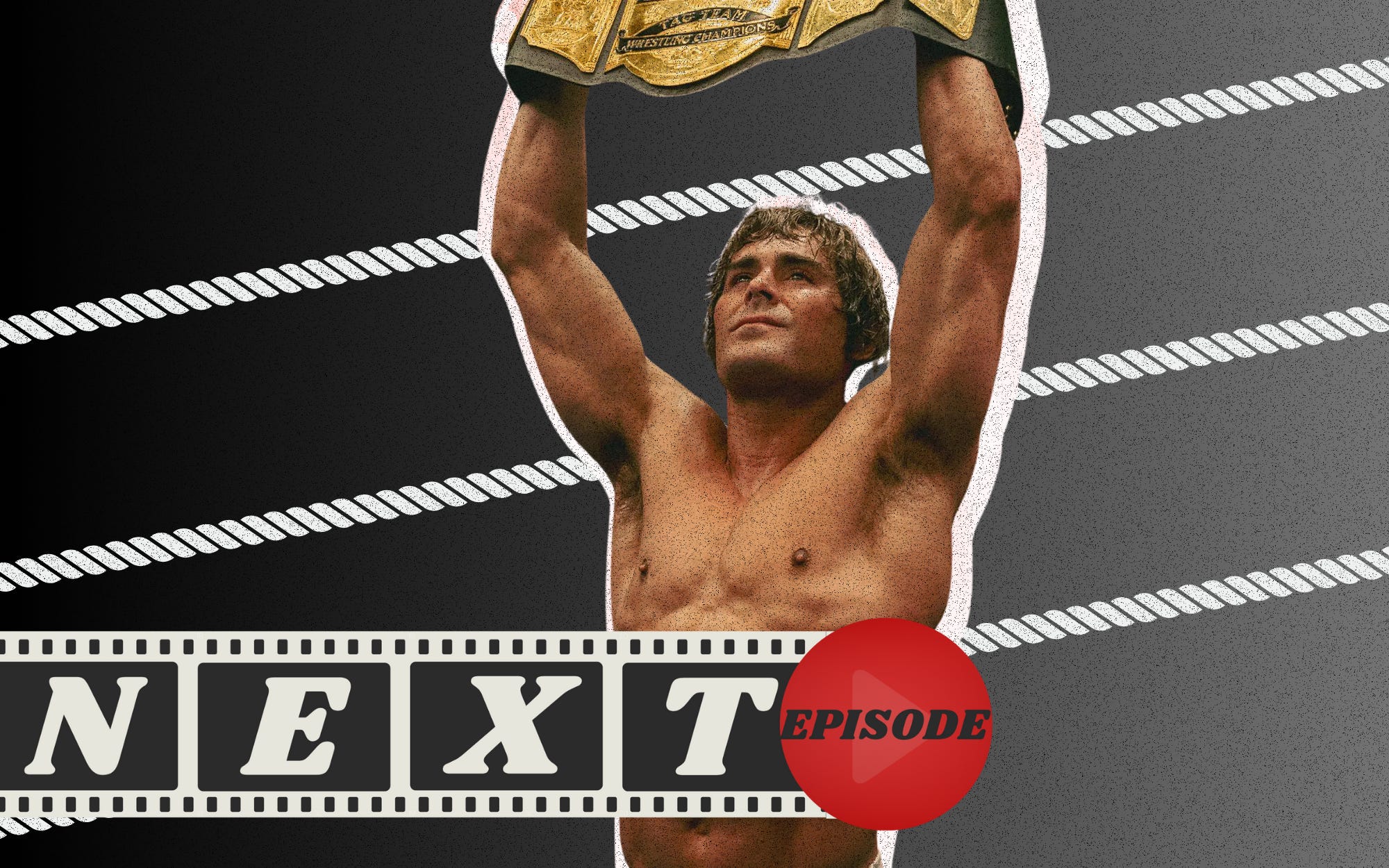
When it was announced that a wrestling biopic of the Von Erich family was coming to the big screen in Sean Durkin’s Iron Claw, my immediate reaction was on how exactly they were going to pack so much tragedy into one single, compact two-hour yarn.
The filmmakers were working with some pretty murky material - a wrestling family cursed by several life events of destruction and devastation. On paper, it stretches almost beyond the realms of human reality and into fiction. In the end, the film didn’t have to contend with the entire life story of the Von Erich’s with the creative decision to annex an entire brother, Chris, as the filmmakers felt that elements of his story would not only overlap with his siblings, but almost added too much misfortune for one viewer to comprehend.
While I believe it’s up there amongst some of the great sporting biographical dramas, and arguably the best wrestling film of its kind, as someone who was fairly in lock with the story beforehand it certainly stuck in the craw that they would exclude an important and worthy component of the Von Erich family tree.
Naturally, I realise this is mostly a me problem along with any wrestling snobs who know more about the inside mechanisms of World Class Championship Wrestling than they care to advertise too much. This is a wrestling film about some grueling but absorbing source material that tries to toe the line between doing its duty with the story and not intimidating the audience. And it does a pretty good job at that. It’s not necessarily aimed at me, or others closely familiar with the Von Erich tale, but a wider audience who are already being asked a lot of by buying into a wrestling movie.
The Von Erich story is a tale of utter pain and misery. A clan of brothers who follow their father, Fritz, superbly acted by Holt McCallany, into the wrestling industry. Determined to do good by him and honour the family’s wrestling legacy, the brothers all have ambitions of making it in the business, whilst also tasked with earning their father’s kudos and meeting his unachievably lofty expectations.
The film mainly focuses on Kevin, the only surviving brother, played by Zach Efron in a performance that, in my book, was starkly overlooked during last year’s award season. We meet brothers David, Kerry, played by Jeremy Allen White, Mike, and eventually Jack, the oldest of the brothers but who died when he was a child.
Left out entirely was Chris, the youngest of the brothers. His story does in many ways overlap with what we see through his siblings - a guy determined to make it in the wrestling industry, facing various setbacks and challenges colluding against that, leading to depression and drug use and eventual suicide.
But there was so much more to Chris’ story than that crude summation. He loved wrestling and, unlike Mike, who didn’t dream of becoming an on screen performer, was determined to make it in the squared circle. However his size, at just 5’5”, and brittle bones made it an impossible task.
Is Marty Supreme the next great sports movie?

In 2026, I’m going to occasionally dabble away from sport and into films, television and pop culture moments that tickle my fancy. Consider this a test run. Feedback on this would be most welcome.
And unlike Kevin, David and Kerry who all had degrees of success in the business, Chris never really got that chance bar some fleeting moments as an extra or as an addition during his brother’s matches. He had to contend with the fact that he’d never be a wrestler in the truest sense, never able to entertain the crowd, earn their adulation and respect, although he was popular with wrestling fans of the time with his underdog frame. And notably with his father, forever be the brother who was too small and meek to become a wrestler and follow in his footsteps. His story is blended with Mike, who had other passions and little desire to enter the business, but this considerably dilutes Chris’ story.
Director Sean Durkin explained that including Chris would have been too much for the audience to handle, too much tragedy, and that the film may never have been made that they tried to do too much.
Including Chris wouldn’t have necessarily made the movie any better, but he has a heart wrenching tale that deserved outright exposure in the film. Chris Von Erich wasn’t just another tragedy in an already tragic family. He was the brother who wanted it most and was denied it almost entirely, and his absence rings loudly in an already cripplingly tragic story.